
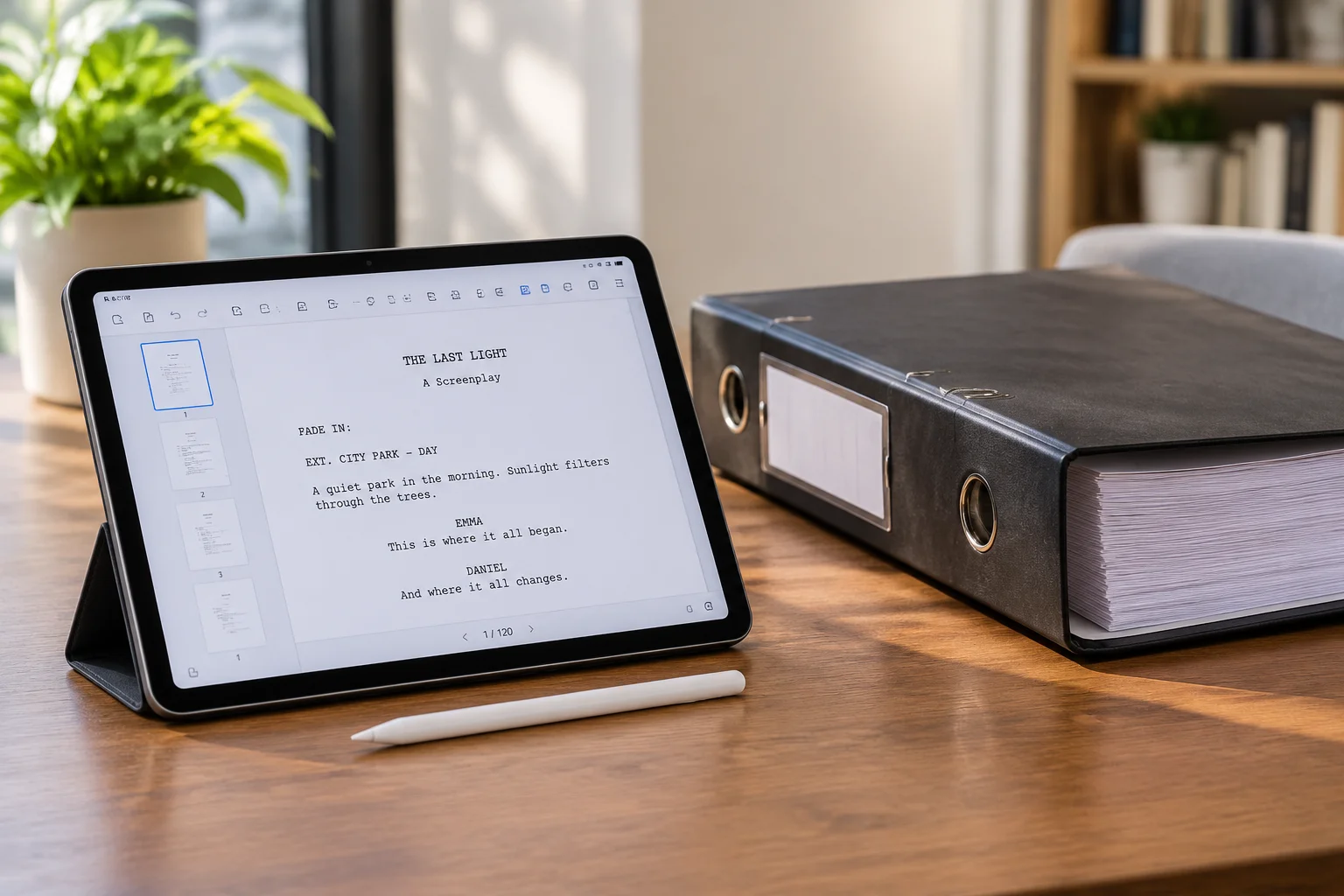
Digital Channels: Velocity and Security Controls
Digital screenplay distribution fundamentally transformed feature film and episodic television production schedules by eliminating courier delays and long midnight print runs. Script coordinators can export locked revision files from writing software and push personalized, encrypted PDF packages directly to hundreds of recipients within minutes. Key cast members, department supervisors, and executive producers obtain immediate access on iPads, laptops, or smartphones. This velocity proves indispensable during rapid pre-production rewrites, where directors and department heads need immediate visibility into scene modifications, budget-impacting locations, and character dialogue shifts.
Yet digital convenience introduces distinct vulnerabilities that production offices cannot overlook. The ease of forwarding digital documents exponentially increases unauthorized leaks, while compromised cloud credentials can expose proprietary narrative arcs prior to release. Furthermore, uncurated digital workflows often result in crew members reading cached offline versions that miss critical late-night errata. To counteract this, modern digital distribution protocols require dedicated reader applications with dynamic recipient watermarking, IP-logging, and automated local file expiration once a newer draft unlocks.
Personalized Burn-In Watermarking
All distributed digital PDFs must feature non-removable, high-opacity diagonal watermarks containing recipient name, email address, production code, and unique download timestamp across every page.
Physical Distribution: Tactical Utility and Collation
Despite ubiquitous mobile technology, physical script distribution remains irreplaceable across soundstages, remote exterior locations, and high-intensity shooting environments. Actors, directors, and camera operators rely heavily on physical three-hole-punched binders because paper never runs out of battery, experiences zero screen-glare under glaring sunlight, and resists sudden software crashes mid-rehearsal. Physical revision pages—printed on standardized industry color stocks such as Blue, Pink, Yellow, and Green—provide instantaneous visual verification that a department is working with the current revision.
Maintaining physical paper discipline requires rigorous office protocols. When a script revision drops, the script coordinator must supervise exact collation runs, inserting newly color-coded replacement pages while discarding or archiving obsolete white sheets according to production security mandates. Loose script pages left on studio soundstages present severe security liabilities. Consequently, productions must enforce strict chain-of-custody protocols, logging signed pickups for full binder distributions and utilizing locked shredding receptacles for discarded revision pages.
Page Destruction & Secure Disposal
Never leave replaced or outdated physical pages in open trash cans on set. Production assistants must deposit all replaced sheets into locked shredding bins located inside the production trailer.
Hybrid Department Synchronization Workflows
World-class productions reconcile the digital versus physical dilemma by establishing a coordinated hybrid workflow. Rather than forcing all departments into an identical medium, the production office assigns distribution channels according to operational requirements while binding them through a unified revision ledger.
- Floor crews, stunt personnel, and camera operators receive physical pocket sides and collated script binders built to endure moisture, physical impact, and bright daylight conditions.
- Art, wardrobe, visual effects, and accounting departments access secured cloud repositories offering instant text search, interactive revision comparison overlays, and centralized digital annotations.
- Daily call sheets explicitly state the authoritative script revision date, active page color, and digital file hash to guarantee absolute cross-departmental alignment before call.
Morning Call Sheet Version Check
The first assistant director and script supervisor must cross-check the call sheet revision header against both physical sides and digital document versions during the morning department head briefing.